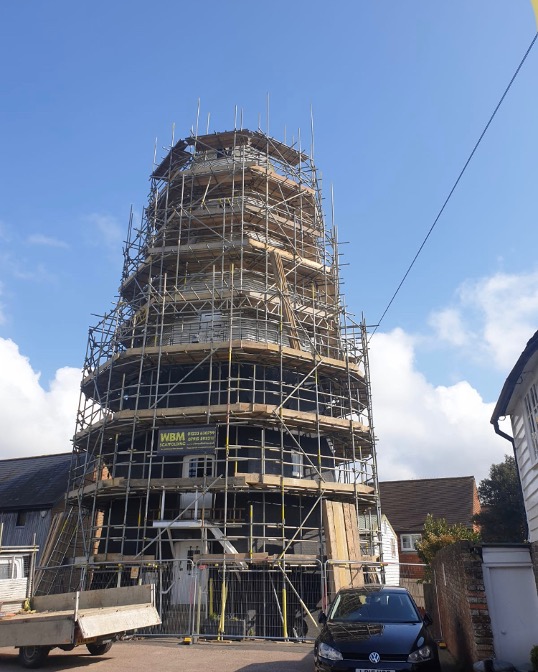
- Designed external scaffolding to decking and MEWP access
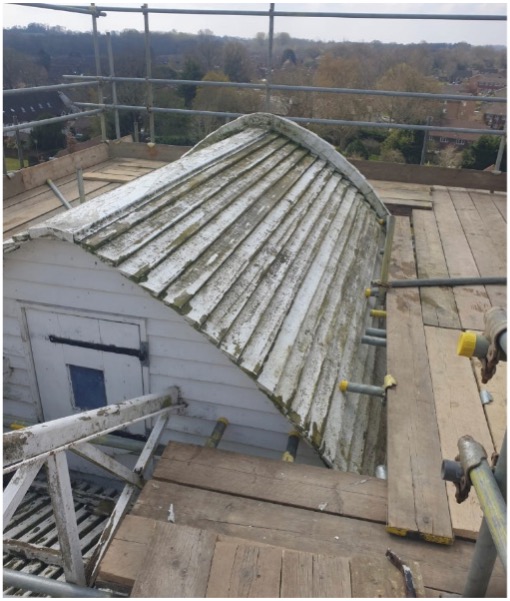
- Replace sections of boarding along with isolated repairs using dry-flex.
- Installation of a crane to remove the sails
- Replacement of structural timber members including shoring works
- Repairs to window including re-glazing.
- Decking repairs.
- Removal of oil-based paints to brickwork and recoating with limewash.
- Repairs to sails.
- Repairs to mechanism internally.
- Full redecoration with architectural
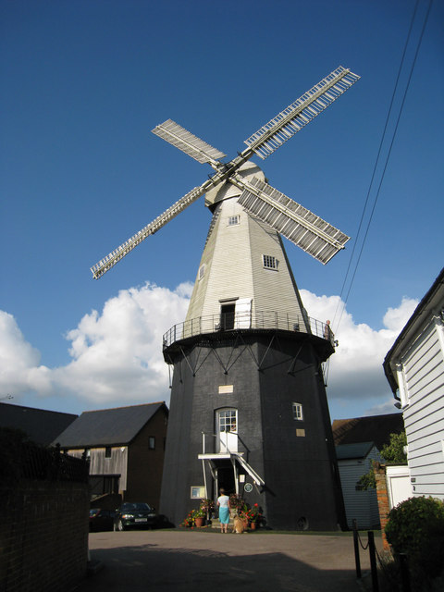
- Largest smock windmill in the UK.
Union Mill Renovations 2020/21
Stage 1 – Completed mid-November 2020
The previous repairs did not last as long as expected and Health and Safety concerns required further work urgently before winter storms arrived. This work is being carried out by Tim Whiting, and his team of millwrights from Saxmundham, Suffolk. They have recently completed the restoration of Saxtead Green Post Mill, near Framlingham in Suffolk, for English Heritage, and work on Chillenden Postmill in East Kent, for KCC.
The millwrights removed the shutters individually, gaining access to them by the traditional method of climbing on the sail frames.
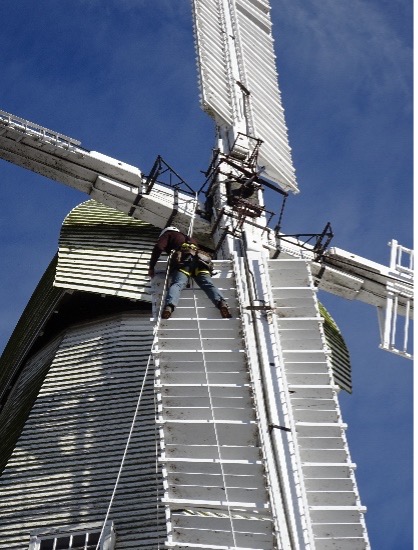
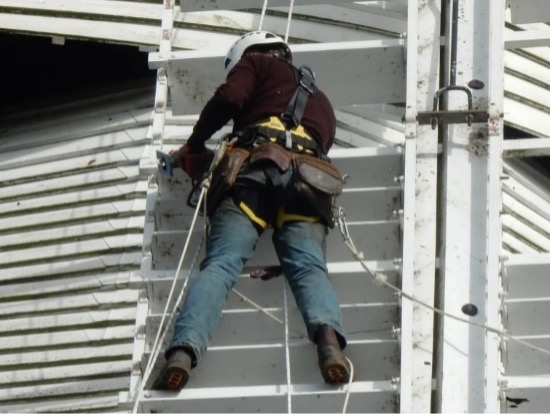
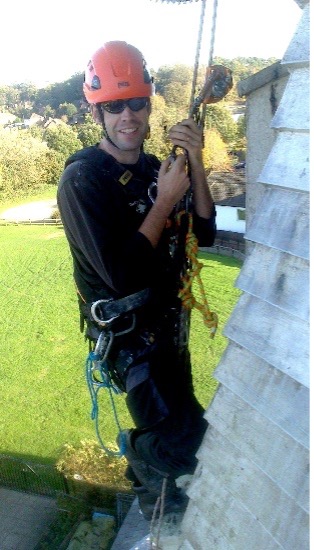
The various bits of metal of the striking mechanism were then removed using their own cherry-picker, purchased brand new as the millwrights needed one with a better reach than the crane they already had. This was also used to slacken the bolts and straps that hold the sail frames to the stocks.
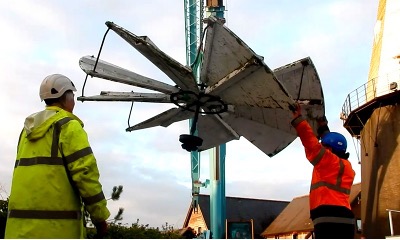
The big crane was then brought in to lower the sail-frames onto the low loader. After unbolting the fantail, it was lowered and transferred to the low-loader.
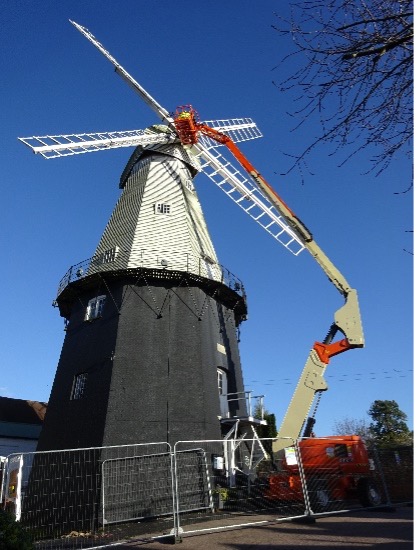
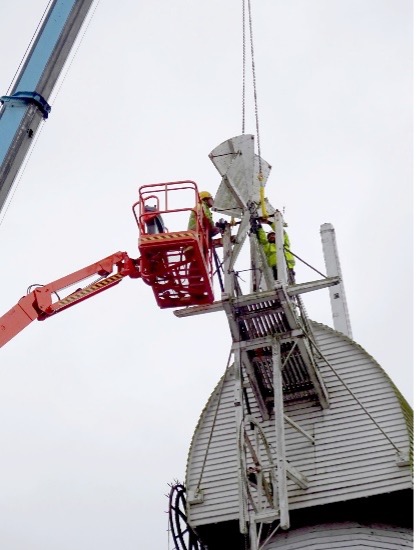
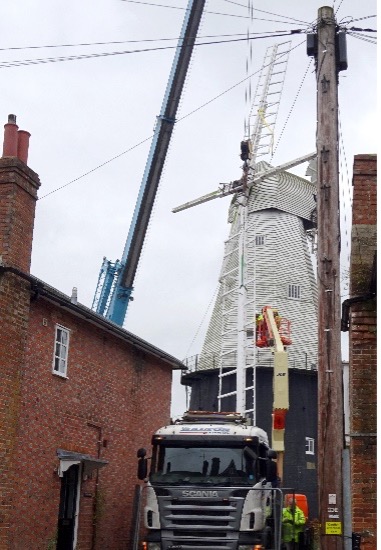
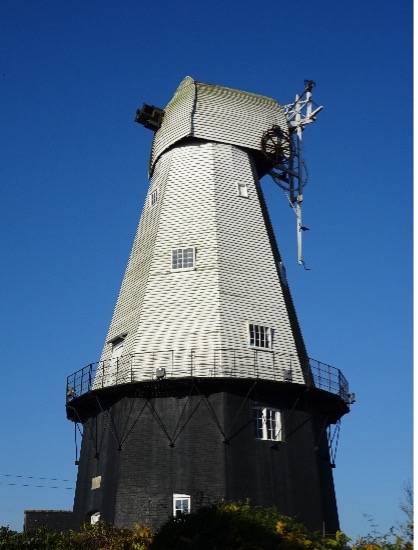
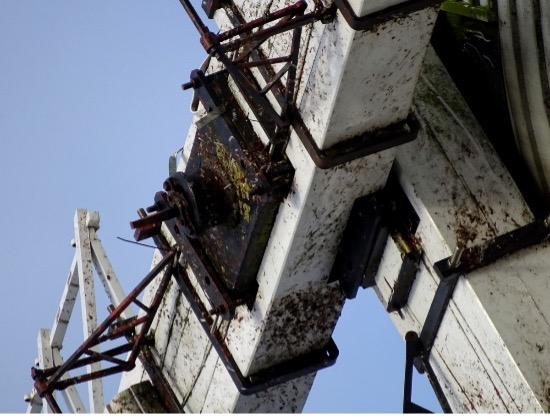
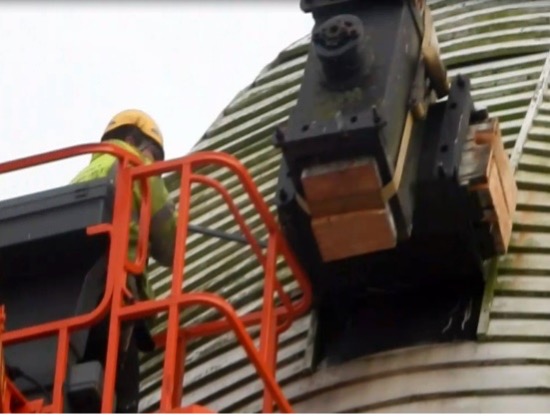
They were unable to pull the stocks from the central canister so had to saw them off and lower them down individually. The stumps still in the canister were then removed using a chainsaw and crowbar. The Sweeps, fantail, and stocks were taken back to the millwrights’ workshop in Suffolk.
Photos: Andrew Riddell, Nick Vinall, Tony Singleton
You can watch a short video showing snippets of these stages below
FLOODLIGHTING
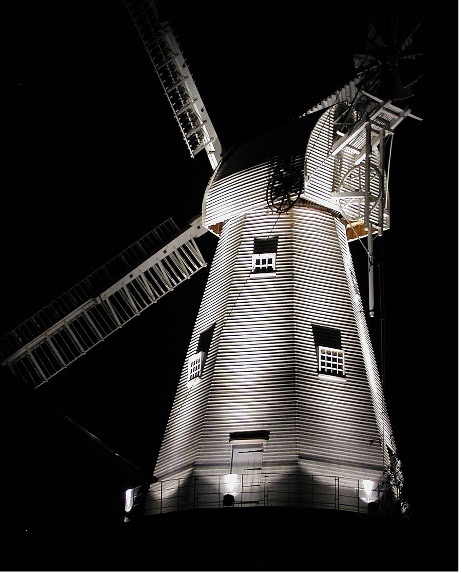
Each evening the Mill has been floodlit, and is a remarkable sight for the Town and for Visitors alike. The original tungsten filament lighting will be replaced with energy efficient LED lighting designed to enhance the evening view of this Grade 1 Listed Building. (Click on image to enlarge.)
RENOVATIONS STAGE 2 – Repairs to Smock and Painting – COMPLETED
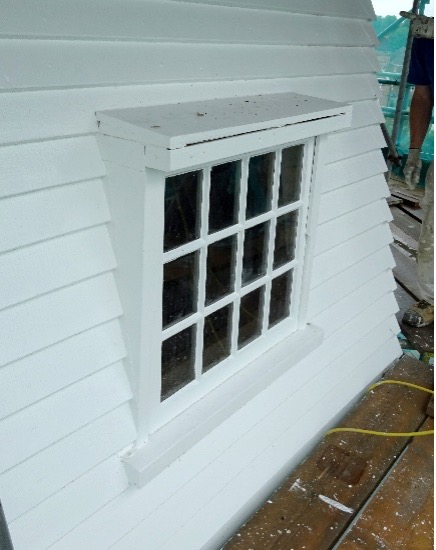
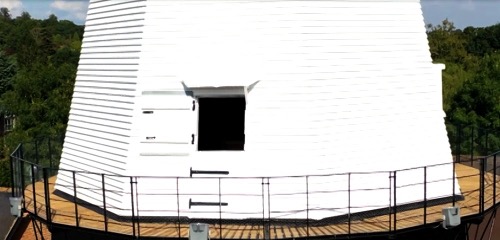
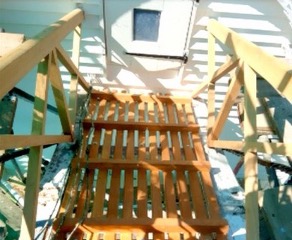
In early 2021, the whole mill was scaffolded so that repairs to windows and doorfames could be carried out, followed by complete painting. Redec, the company responsible, decided to add wedge-shaped tops to the windows (photo below left) so that rain ran off, not back towards the weather-boarding as before. During August 2021, the scaffolding around the smock was removed, giving access to the staging. Rotten window sills and all the slats on the staging have been replaced with oak, which had to be imported from south west France, which caused a delay. The staging metalwork was cleaned and repainted, the chicken wire on the guard rails replaced, and then the lower scaffolding was finally removed. The brick base had to be repaired in several places and then repainted with special paint from Spain – another cause of delay.
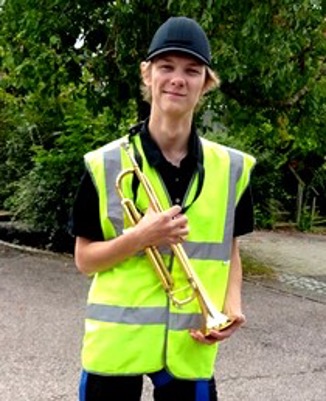
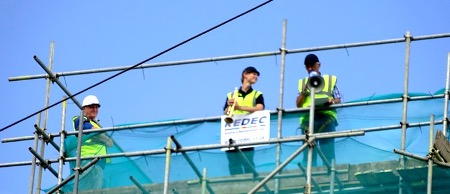
To CELEBRATE the completion of Stage 2, we organised a BUGLE CALL
Members, friends, and neighbours were invited to the mill on a cool afternoon at the end of August. The scaffolding was still in place, and from a platform around the cap, our chairman addressed the crowd of about 60 with a brief history of the mill (with a megaphone), including the story of how, when the mill was completed in 1814 by the millwright, James Humphrey, his nephew stood on top of the cap and played a trumpet. On this occasion, Max Chesters (right), who lives on the Hill, opposite the mill, played (very competently) a short fanfare by the French baroque composer, Charpentier, and was warmly applauded. After an encore, the onlookers were treated to glasses of bubbly. The proceedings were recorded for posterity by an overhead drone, courtesy of HawkEye Aerial Media of Maidstone and this was used to make a video of the occasion, which you can watch HERE.
The sweeps of Cranbrook’s Grade I listed Union Windmill have been restored to the Kent skyline, marking the completion of a 15-month refurbishment project by Kent County Council
This magnificent working windmill was built in 1814 and has been in the care of the county council since 1958. The mill is regularly open to the public thanks to volunteers from the Cranbrook Windmill Association.
Cranbrook windmill is the tallest ‘smock mill’ in Britain, standing 72ft (22m) to the top of the cap roof, with seven floors. This type of windmill used to be very common in Kent and the term ‘smock mill’ relates to the white painted wooden tower of the mill which is said to look like the traditional garment once worn in rural areas.
Cranbrook windmill is the tallest ‘smock mill’ in Britain, standing 72ft (22m) to the top of the cap roof, with seven floors. This type of windmill used to be very common in Kent and the term ‘smock mill’ relates to the white painted wooden tower of the mill which is said to look like the traditional garment once worn in rural areas.
Each of the four sails, known south of the Thames as ‘sweeps’, is almost 30ft (9m) long and contains 66 wooden shutters. These can be opened or closed to control the speed of the mill. Four new sweeps were constructed in East Suffolk by specialist craftspeople and transported a distance of 125 miles to the site, where they were lifted into position by a large mobile crane. The painstaking process of installing the sweeps took three days in total.
Tim Whiting, whose firm of “millwrights” has built and fitted the sweeps, said:
“We are proud to have been involved with the restoration of KCC’s flagship smock mill. My team has worked hard but their efforts have paid off – the sight of the completed mill is truly stunning.”
Luke Bonwick, KCC’s Conservation Officer who supervised the project, said:
“Collaborative working has been key to the success of this project. Cooperation between local residents and volunteers, our brilliant contractors and KCC’s Heritage Conservation and Infrastructure teams has delivered the spectacular results you can see today.”
Last year the mill was wrapped in scaffolding while essential weatherproofing repairs were carried out by local contractors Redec Ltd. Using the skills of the early millers, local volunteers will soon be able to grind flour once again, using only the power of the wind.
“Cranbrook Mill is a beautiful building and an important part of Kent’s heritage. I’d like to congratulate all those involved in the renovations through a very challenging period. It’s an excellent example of volunteers and professionals working together.”
Susan Carey KCC Cabinet Member for Environment
KCC Cabinet Member for Environment, Susan Carey said:
“Cranbrook Mill is a beautiful building and an important part of Kent’s heritage. I’d like to congratulate all those involved in the renovations through a very challenging period. It’s an excellent example of volunteers and professionals working together.”
Cranbrook and Sissinghurst Parish Council chairman Kim Fletcher said:
“Residents will be delighted to have our windmill back in full sail. Even while it was naked, it has been floodlit as a Christmas tree and with the Ukrainian flag, but to have it back as one of the iconic sights of our town is great news.”
“We urge visitors to come to see the mill in all its glory, along with our 13th century church, which is known as our Cathedral in the Weald, and the museum that houses our collection of Cranbrook Colony paintings as well as local history.”